Top Biodegradable Nail Tools for an Eco-Friendly Manicure
Have you ever looked at your nails after a gel or acrylic removal and felt a pang of genuine frustration? The thinning, the peeling, and that raw, sensitive feeling are more than just an aesthetic issue—they are signs of a compromised nail barrier. For many women, the journey to recovery feels like a cycle of temporary fixes and harsh chemicals.
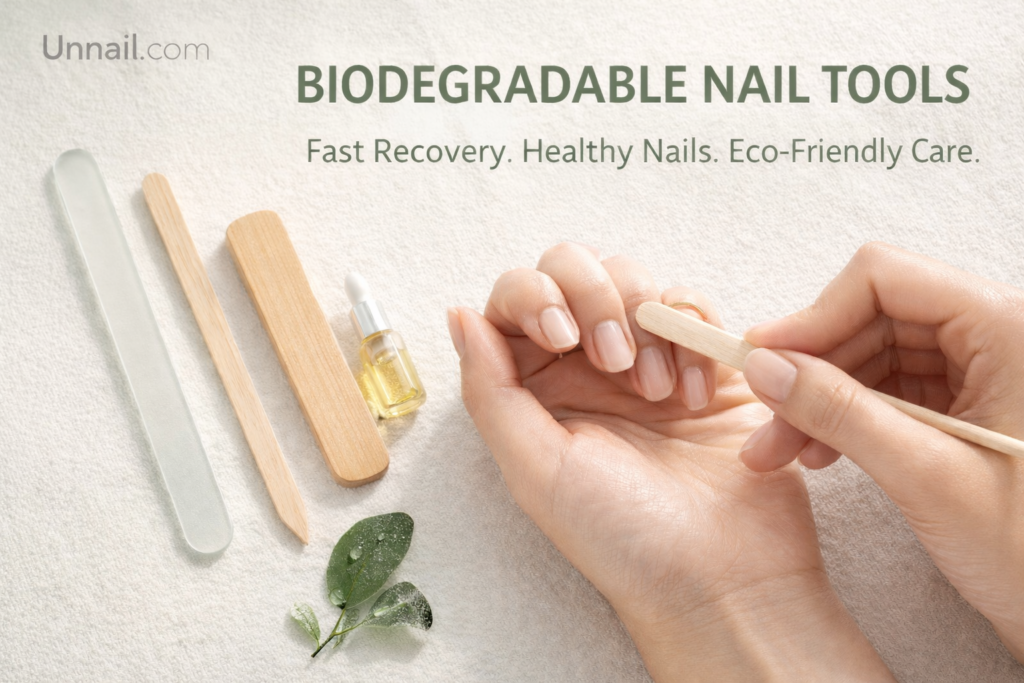
However, true nail health isn’t just about what you put on your nails; it’s about the tools you use to shape them. Transitioning to high-quality biodegradable nail tools is one of the most effective ways to support your nail recovery while honoring the environment. When your nails are in a fragile state, the last thing they need is the aggressive friction of cheap plastic or the chemical leaching of synthetic materials.
At UNNAIL, we believe that nail recovery should be science-backed, non-toxic, and sustainable. This guide explores how an eco-friendly manicure kit can transform your routine from a damaging chore into a restorative ritual.
Common Nail Recovery Mistakes
During the recovery phase, I’ve noticed many women make the same five critical errors that stall their progress. Honestly, it’s easy to do when you’re just trying to make your hands look presentable again.
1. Over-buffing
Attempting to buff away the ridges left by acrylics thins the nail even further. It feels like you’re smoothing them out, but you’re actually removing the few healthy layers you have left.
2. Using Harsh Hardeners
Many “strengtheners” contain formaldehyde. While this makes nails hard initially, it also makes them incredibly brittle and prone to snapping like a dry twig.
3. Peeling Gel Polish
We’ve all been tempted, but forcibly removing polish tears away the top layer of your nail cells. It’s a physical trauma that takes months to grow out.
4. Skipping Cuticle Care
The cuticle is the seal that protects the new nail matrix; ignoring it or pushing it back too aggressively with metal tools stunts growth.
5. Ignoring Hydration
Nails need a balance of protein (keratin) and moisture (oils). Without enough lipids, the keratin becomes stiff and breaks under pressure.
Why Switching to Biodegradable Nail Tools is Essential for Recovery
When the nail plate is damaged, the layers of keratin are frayed and vulnerable. Traditional plastic emery boards and metal scrapers often create micro-tears in the nail edge, leading to further peeling and breakage.
The Impact of Nail Plate Damage
Repeated use of aggressive salon tools can thin the dorsal layer of the nail plate. This leads to “onychoschizia” (the medical term for nail peeling). When your tools are made from natural, high-integrity materials, you reduce the risk of further mechanical trauma. It’s about being as gentle as possible while the nail regenerates.
Long-Term Health and Environmental Benefits
Using zero waste nail tools isn’t just a trend; it’s a commitment to a toxin-free lifestyle. Traditional nail files take decades to decompose in landfills, often shedding microplastics into the ecosystem. By choosing sustainable salon tools, you protect your body from potential endocrine-disrupting plastics and protect the planet simultaneously. It feels better knowing your self-care isn’t leaving a permanent footprint.
The Sensory Experience of Natural Tools
In fact, one thing I noticed immediately after switching to bamboo and wood-based tools was the tactile difference. There’s a warmth to natural materials that plastic simply lacks. Metal tools feel clinical and cold, often vibrating through the nail in a way that feels jarring when your nail beds are already sensitive. Biodegradable tools, specifically those made from FSC-certified wood, have a slight, natural give. They absorb the pressure of the stroke, making the whole process feel more like a spa ritual and less like a maintenance task.
Your Step-by-Step Nail Recovery Plan
Rebuilding your nails requires a structured routine. It isn’t an overnight fix. Follow this protocol to restore your natural strength within about 12 weeks.
- Stop Aggressive Treatments: Commit to at least 8 weeks without gels, acrylics, or dip powders. Your nails need to breathe and stabilize.
- Trim and Reshape Safely: Use reusable nail files (glass or high-grade biodegradable wood) to keep nails short. Shorter nails are less likely to snag and tear while the plate is thin.
- Hydrate (The Cuticle Oil Protocol): Apply a plant-based cuticle oil containing Jojoba or Almond oil at least three times a day. Jojoba is a game-changer because its molecular structure is small enough to actually penetrate the nail.
- Use a Strengthening Base Coat: Choose a 10-free, breathable formula that acts as a physical shield without suffocating the nail.
- Protect from Water Damage: Wear gloves when washing dishes; water causes the nail to swell and contract, weakening the cell structure over time.
- Support Internal Nutrition: Ensure your diet includes Biotin, Zinc, and Silica to fuel the nail matrix from within.
Clean Nail Care Swaps for Stronger Natural Nails
If you want to heal your nails, you must audit your current kit. I recommend swapping these common offenders for safer, more effective alternatives:
- Swap Acetone for Soy-Based Remover: Acetone is a solvent that dehydrates the nail plate. Soy removers use esters to dissolve polish while adding hydration back in.
- Swap Plastic Files for Glass or Wood: Glass files (or reusable nail files with replaceable wood cores) seal the keratin edge rather than shredding it.
- Swap Synthetic Cuticle Pushers for Bamboo: Bamboo cuticle sticks are softer and less likely to cause “Beau’s lines” (those annoying horizontal ridges) caused by trauma to the matrix.
- Swap Standard Polish for 10-Free Formulas: Look for polishes that exclude Formaldehyde, Toluene, and DBP.
The UNNAIL Longevity Score
We’ve developed this “Nail Health Score” to help you evaluate your tools and products. It’s a quick way to see what’s actually helping and what’s just taking up space in your drawer.
| Tool Type | Protection Level | Ingredient Safety | Repair Support | Longevity Score |
|---|---|---|---|---|
| Metal Files | Low | High | Low | 2/10 |
| Plastic Emery Boards | Medium | Low | Medium | 4/10 |
| Bamboo Cuticle Sticks | High | High | High | 10/10 |
| Biodegradable Wood Files | High | High | Medium | 8/10 |
Buying Guide: Selecting Top Biodegradable Nail Tools
When shopping for an eco-friendly manicure kit, keep these criteria in mind. It’s not just about the label; it’s about the quality of the materials.
What to Look For
- FSC-Certified Wood: Ensures the wood is sourced from responsibly managed forests.
- Natural Abrasives: Look for files that use quartz or sand rather than synthetic plastic grit.
- Compostability: The best zero waste nail tools can be put in your home compost bin once they lose their effectiveness.
Red Flags to Avoid
- Phthalates (DBP): These are often linked to endocrine disruption and are best avoided entirely.
- Excessive Alcohol: Found in many “quick dry” sprays, it severely dehydrates the nail plate.
FAQ: Expert Tips for Nail Health
How long does it take to repair damaged nails after acrylics?
It typically takes 4 to 6 months for a nail to fully grow out. However, you should see a noticeable improvement in texture within about 4 weeks if you’re consistent.
Are biotin supplements effective for nail growth?
Yes, studies show biotin can increase thickness. But remember, it works best when paired with topical care and gentle sustainable salon tools.
Should I stop wearing polish during nail recovery?
To be honest, a completely “naked” nail is best for hydration, but if you need some coverage, a 10-free breathable polish is a safe compromise.
Rebuild Your Strength with UNNAIL
Healthy nails are rebuilt—not rushed. The transition to using biodegradable nail tools is a significant first step. By choosing materials that respect your biology, you create the optimal environment for your natural nails to thrive again. It’s a small change that makes a huge difference over time.
Ready to take the next step toward the nails you deserve?
- Take the [Nail Recovery Quiz] to find your custom repair schedule.
- Download the [UNNAIL Recovery Guide] for more keratin health tips.
- Explore the [Clean Nail Toolkit] to shop our sustainable essentials.