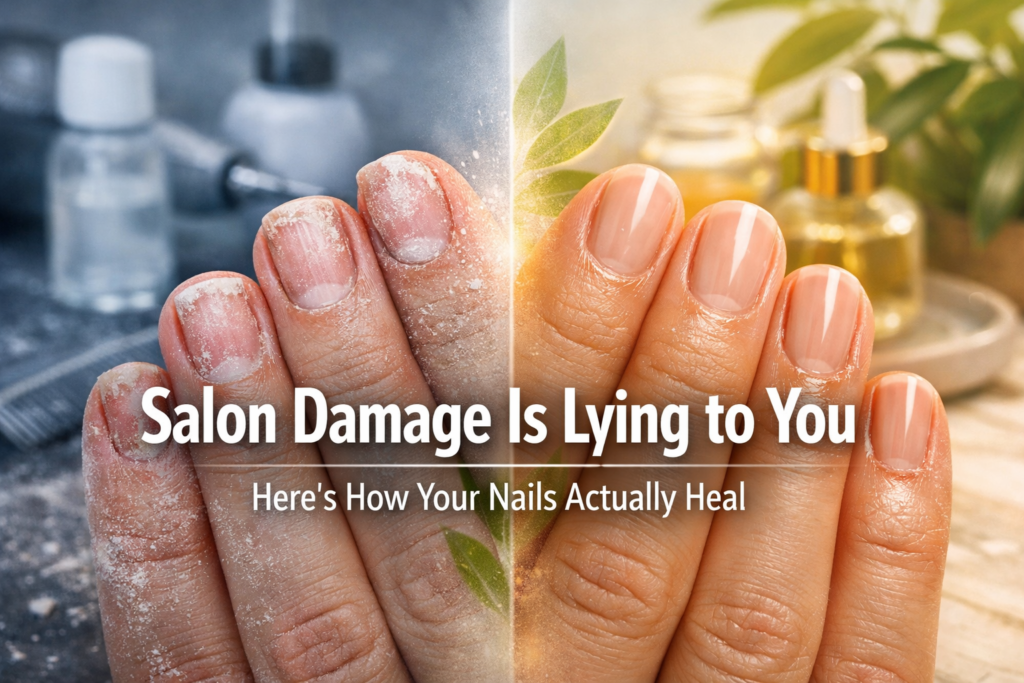
The Truth About Recovering from Salon Damage
If you’ve recently soaked off a set of acrylics or peeled away a gel manicure only to find your natural nails thin, papery, and painful, you are definitely not alone. I’ve seen this cycle of “damage and hide” play out so many times—we cover up brittle, peeling plates with more chemicals just to feel presentable for a meeting or a date. But to be honest, the path to true recovery doesn’t lie in more salon appointments. It starts with switching to high-performance, eco-friendly nail products that actually prioritize your biological health over a temporary aesthetic.
The industry is finally shifting. We no longer have to choose between a high-shine finish and the integrity of our nail beds. By opting for sustainable nail care and non-toxic nail polish, you aren’t just making a “green” choice for the planet; you are providing your body with the clean environment it needs to regenerate keratin without interference. In this guide, we’re going to look at the dermatologist-vetted swaps that transition your routine from destructive to restorative.
Why Your Nails Are Actually Struggling
1. The Biological Breakdown
When we talk about nail recovery at UNNAIL, we are talking about the rehabilitation of the nail plate. Your nail is basically a stack of flattened keratin cells. Harsh salon chemicals, like methyl methacrylate (MMA) and high-concentration acetone, strip the lipids that hold these layers together like glue. Once that glue is gone, the peeling starts.
2. The True Cost of Chemical Damage
Continued use of traditional products can lead to chronic thinning and even “onycholysis”—that’s the clinical term for when the nail plate separates from the nail bed. It sounds scary because it is. Beyond the physical pain, the cost of constantly “fixing” damaged nails at the salon adds up to thousands of dollars a year. Investing in eco-friendly nail products is more of a permanent solution than a chemical bandage.
3. Reclaiming Your Confidence
There is a unique kind of anxiety that comes with showing “naked” damaged nails. They look stained, they feel sensitive, and they snag on everything. Transitioning to a clean routine allows your nails to breathe and regrow, eventually giving you the confidence to wear your natural nails with nothing but a clear, protective coat. In fact, most of our readers find that their natural nails look better than the fakes once they heal.
The Real Benefits of Going Eco-Friendly
Switching to a clean routine offers three primary pillars of recovery that I’ve noticed make the biggest difference:
- Systemic Health: Your nail bed is vascularized, meaning it has a blood supply. While absorption is minimal, chronic exposure to endocrine disruptors found in cheap polishes can have cumulative effects you just don’t want.
- Accelerated Growth: vegan nail polish brands often infuse their formulas with celery seed extract, biotin, and vitamin E rather than harsh plasticizers. This actually stimulates the matrix for faster turnover.
- Environmental Integrity: Using cruelty-free nail products and biodegradable nail tools ensures your beauty routine doesn’t contribute to microplastic pollution or animal testing. It feels better all around.
5 Habits That Sabotage Your Progress
Before we dive into the products, we have to talk about the habits that might be ruining your hard work. I used to do some of these myself without realizing the damage:
- Over-buffing: Trying to smooth out ridges by buffing them down only thins the nail further. It’s like sanding a thin piece of wood until it breaks.
- Using “Hardness” as a Metric: Many old-school hardeners use formaldehyde. This makes nails so hard they become brittle and snap like glass. You want flexibility, not just hardness.
- Peeling Gel Polish: This literally rips away the top 2-3 layers of your nail cells. Just don’t do it.
- Skipping Cuticle Care: The cuticle is the seal that protects the new nail growing underneath. If it’s dry or cut, bacteria enter the matrix and mess with the growth.
- Ignoring Hydration: Nails need a balance of protein and moisture. Over-processing strips the moisture, leaving them parched and flaky.
Smart Swaps for a Stronger Foundation
To truly heal, you must replace your old “toxic” staples with these high-performance, eco-friendly nail products. One thing I noticed is that these swaps actually feel more luxurious to use.
1. Soy-Based Remover vs. Acetone
Traditional acetone is a solvent that dehydrates the nail plate instantly. Soy-based removers are oily, gentle, and enriched with vitamins. They take a few seconds longer to work, but they leave the nail conditioned rather than chalky.
2. Glass Nail Files vs. Emery Boards
Emery boards create microscopic tears in the nail edge, leading to peeling. A high-quality glass file (chemically etched) seals the keratin layers together as you file, preventing future splits. It’s a game-changer for anyone with brittle tips.
3. Breathable Base Coats
Standard polishes create an occlusive seal. “Breathable” or “Oxygenated” formulas allow water and air to pass through to the nail, which is essential for maintaining the natural oil-moisture balance of the plate.
10 Eco-Friendly Nail Products Dermatologists Recommend
When building your recovery kit, look for these specific categories and dermatologist-approved types of eco-friendly nail products. These aren’t just “clean”—they actually work.
1. Soy-Based Polish Remover
It removes polish without stripping the natural lipids from the nail plate. Best for anyone with chronic peeling or “white spots” caused by dehydration.
2. 10-Free Strengthening Base Coat
Uses plant-derived AHAs and Hexanal to strengthen the nail structure without formaldehyde. Crucial for post-acrylic recovery where the nail is thin and “bendy.”
3. Professional Glass Nail File
Smooths the edge to a microscopic level, preventing the “catch” that leads to deep tears. Essential for those prone to snags and side-wall splits.
4. Jojoba-Based Cuticle Serum
Jojoba has a small molecular structure that can actually penetrate the nail plate and the proximal nail fold. This is probably the #1 tool for actual nail growth.
5. Biotin-Infused Vegan Nail Polish
Provides color while delivering nutrients directly to the surface. Perfect for women who aren’t ready to go completely “naked” but want to heal.
6. Bamboo Nail Scrub Brush
Gently cleans under the nail without damaging the hyponychium (the skin under the tip). Great for maintaining hygiene during the recovery phase.
7. Celery Seed Extract Treatment
Proven to smooth out ridges and increase nail thickness naturally. This is a must-have for aging nails or those with deep vertical ridges.
8. Water-Based Polish for Sensitive Skin
Zero fumes and zero harsh solvents. These are generally considered the safest options for those with extreme sensitivities or during pregnancy.
9. Biodegradable Lint-Free Wipes
Prevents the transfer of bacteria and avoids the micro-scratches caused by rough paper towels. Makes the whole process feel much cleaner.
10. Plant-Derived Top Coat
Uses corn, cotton, and wheat to create a hard-wearing shine without toxic resins. It adds longevity to a clean manicure without the damage.
The 6-Step Step-by-Step Recovery Plan
If your nails are currently in a state of crisis, here is a simple protocol to follow. It takes patience, but it works:
- The “Clean Break”: Stop all aggressive treatments (gels, acrylics, dip) for at least 8 to 12 weeks. I know it’s hard, but your nails need this.
- Trim and Reshape: Keep nails short and square-round to prevent snagging. Use a glass file to seal the edge.
- The Cuticle Oil Protocol: Apply a plant-based oil (Jojoba or Sweet Almond) to your cuticles at least three times a day. Keep one at your desk and one by your bed.
- The Strengthening Shield: Apply a 10-free strengthening base coat to provide a physical barrier against the elements.
- Water Protection: Wear gloves when washing dishes. Water expands the nail cells, and the contraction during drying causes peeling.
- Internal Support: Support the process with a diet rich in silica, biotin, and healthy fats. Beauty starts from within, after all.
Buying Guide: Navigating the “Greenwashing”
When shopping for eco-friendly nail products, labels can be confusing. Here is what I look for to make sure I’m not being fooled by marketing:
What to Look For
- 10-Free to 21-Free: These labels indicate the product is formulated without the most common toxins.
- Bio-Sourced Ingredients: Look for “Plant-based” or “80% Natural” certifications.
- PETA/Leaping Bunny Certified: This ensures your products are cruelty-free.
The “Big 5” Red Flags
Avoid these like the plague: Formaldehyde (carcinogen), Toluene (affects the nervous system), DBP (endocrine disruptor), Camphor (skin irritant), and TPHP (hormonal interference).
A Note on Nail Minimalism
In my own journey to healthier nails, the biggest hurdle wasn’t finding the products—it was the mental shift of accepting my natural nails. We’re so conditioned to see thick, plastic-looking nails as the standard of beauty. But there is something incredibly chic about a short, clean, well-manicured natural nail. It looks healthy because it *is* healthy. Once you get through the first few weeks of the “naked” phase, you might find you don’t even want to go back to the salon.
UNNAIL Longevity Score
We rate products based on their ability to support long-term nail health, not just a 7-day shine. Here is how some common items stack up:
| Product Type | Ingredient Safety | Repair Support | Score |
|---|---|---|---|
| Soy Remover | 10/10 | Excellent | 10/10 |
| Glass File | 10/10 | Vital | 9/10 |
| 10-Free Polish | 8/10 | Good | 8/10 |
| Traditional Gel | 2/10 | Destructive | 1/10 |
Frequently Asked Questions
How long does it take to repair damaged nails?
It takes about 3 to 6 months for a fingernail to grow from the cuticle to the free edge. You’ll see improvement in 4 weeks, but full recovery requires a complete growth cycle. Patience is key!
Can nails fully recover from gel damage?
Yes. As long as the nail matrix isn’t permanently scarred, your nails will grow back healthy if you stop the damaging cycle and provide proper hydration.
Should I stop wearing polish during recovery?
A “naked” period is great, but wearing a non-toxic, breathable base coat can actually protect thin nails from water damage while they heal. It acts like a protective shield.
Conclusion: Rebuild With Purpose
Healing your nails is a marathon, not a sprint. By choosing eco-friendly nail products, you are choosing to respect your body’s natural healing process rather than forcing it to perform under pressure. Remember: healthy nails are rebuilt—not rushed. Your natural nails have the potential to be strong, resilient, and beautiful. It’s time to give them the clean start they deserve. Are you ready to ditch the chemicals for good?