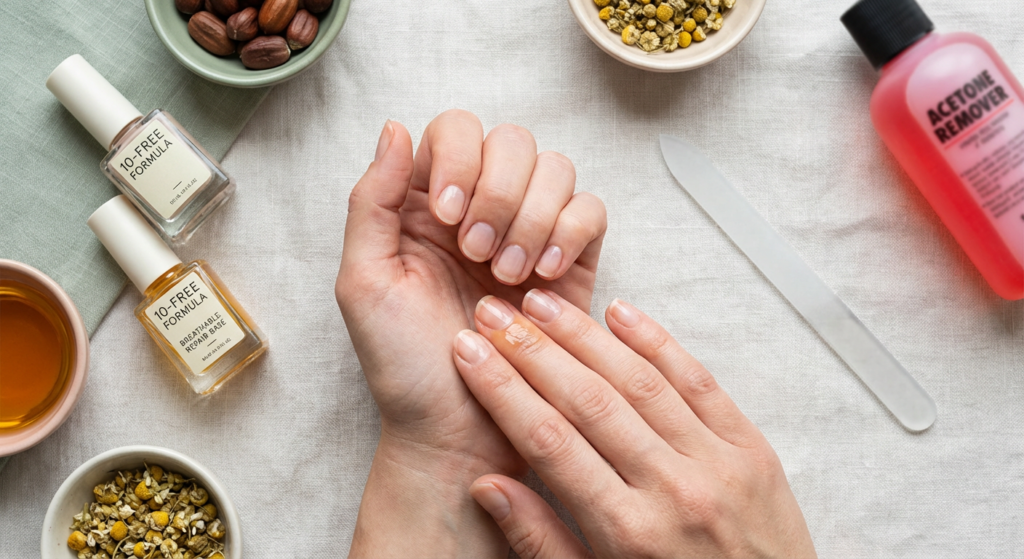
Is Your Nail Polish Really Non-Toxic? What Labels Actually Mean
You know the feeling. You finally soak off your acrylics or peel away that last bit of stubborn gel, only to find the nails underneath are thin, papery, and sensitive to the touch. It’s a moment of vulnerability where all you want is to cover them back up and pretend it isn’t happening.
But reaching for a standard bottle of lacquer might be the very thing standing between you and total recovery. To be honest, if you are serious about rebuilding your nail integrity, understanding the world of non toxic nail polish brands is no longer optional—it is a requirement for health. We’ve all been there, staring at nails that look more like wet tissue paper than actual human anatomy.
The transition from “salon-addict” to “natural nail enthusiast” is often paved with confusion. You see labels like “10-free,” “breathable,” or “vegan,” but what do they actually do for a damaged nail plate? Quick fixes like “extra-strength” hardeners often contain the very chemicals that make nails brittle in the long run. Real recovery requires a shift in philosophy: moving away from hiding damage and toward nurturing the biological foundation of your hands.
Common Nail Recovery Mistakes to Avoid
Before you transition to a chemical free manicure, ensure you aren’t accidentally sabotaging your progress with these common habits. I’ve seen so many people try to “fix” their nails while making them worse:
- Over-buffing: Trying to smooth out ridges from gel damage by buffing only thins the nail further. It’s a temporary aesthetic fix with a high cost.
- Using Harsh Hardeners: Many “strengtheners” use formaldehyde to cross-link nail proteins. This makes nails feel hard instantly but makes them shatter-prone later.
- Peeling Your Polish: Even with non-toxic brands, picking at your polish lifts the top layer of your natural nail cells.
- Skipping Cuticle Care: The cuticle is the seal that protects your new nail growth. If it’s dry, your new nail will be weak before it even emerges.
- Ignoring Hydration: Nails need a balance of protein (for strength) and moisture (for flexibility). Too much of one without the other leads to breakage.
Why I Stopped Using “Extra-Strength” Hardeners
In fact, one thing I noticed early on in my own recovery journey was that the more “strengthener” I used, the more my nails snapped. It felt counterintuitive. I eventually learned that most traditional strengtheners turn the nail into a piece of glass—hard, yes, but incredibly brittle. True strength comes from flexibility, not just rigidity. Switching to a 10 free nail polish base that focuses on nutrients rather than industrial hardeners changed everything for me.
Benefits of Choosing non toxic nail polish brands Properly
1. Enhanced Biological Health
When you remove “The Toxic Trio” (Formaldehyde, Toluene, and DBP), you allow the nail plate to maintain its natural lipid balance. This prevents the “cycle of brittleness” where nails become so hard they snap at the slightest pressure.
2. Optimized Growth Cycles
Healthy nails grow at a rate of about 3mm per month. Harsh chemicals can irritate the matrix—the area where your nail is born—slowing down this process. Clean formulas support the matrix, ensuring that the new nail emerging is as strong as possible.
3. Protective Barrier Without Suffocation
Many brands now offer breathable nail polish technology. This allows oxygen and water vapor to pass through the polish to the nail, preventing the “waterlogging” or extreme dehydration that leads to peeling. I used to think “breathable” was just marketing fluff, but the science of moisture exchange is real.
Expert-Backed Advice: The Science of the Nail
From a dermatological perspective, the nail is an appendage of the skin. Just as you wouldn’t put harsh industrial solvents on your face, you shouldn’t put them on your fingertips. Your nail plate is a porous structure made of alpha-keratin. When you apply traditional polishes loaded with harsh solvents, those chemicals can penetrate the layers, leading to “keratin granulations”—those white, chalky patches you see after removing polish.
When we talk about “keratin science,” we are talking about maintaining the disulfide bonds that hold nail cells together. Non toxic nail polish brands are formulated to respect these bonds rather than stripping them away. Remember, it takes roughly six months for a nail to grow from the cuticle to the free edge. This means the “recovery” you see today is the result of what you did weeks ago.
Your Step-by-Step Nail Recovery Plan
1. The Great Reset
Commit to a minimum of 2–4 weeks without gels, acrylics, or dip powders. Your nails need a “breathing period” to re-equilibrate their moisture levels. It might feel “naked,” but it’s necessary.
2. The Micro-Trim
Keep damaged nails short and rounded. Long, damaged nails act as levers; the slightest bump can cause a tear deep into the nail bed. Use a professional glass file to seal the edges and prevent fraying.
3. The Hydration Protocol
Apply a high-quality cuticle oil containing Jojoba or Squalane at least three times a day. Jojoba oil is one of the few oils with a molecular structure small enough to actually penetrate the nail plate.
4. Apply a Restorative Base Coat
Switch to a 10 free nail polish base coat specifically designed for recovery. Look for ingredients like Celery Seed Extract or Bamboo to stimulate natural thickening while providing a physical shield.
Clean Nail Care Swaps for Stronger Natural Nails
If you are ready to overhaul your kit, start with these essential swaps. I’ve found these make the biggest difference over a 30-day period:
- The Polish: Swap standard drugstore brands for 21 free nail polish options. These formulas exclude the most inflammatory and endocrine-disrupting chemicals.
- The Remover: Replace Acetone—which strips 100% of natural oils—with soy-based or water-based removers. It takes a little longer to work, but your cuticles will thank you.
- The File: Ditch the grit-heavy emery boards for a professional glass nail file. It prevents micro-tears in the keratin.
- The Base: Look for breathable nail polish base coats that allow for metabolic exchange.
Buying Guide: What to Look For vs. Red Flags
What to Look For
- 10-Free to 21-Free Labels: These indicate the number of specific toxic ingredients excluded.
- Keratin or Biotin Infusion: Ingredients that actively help the nail structure while you wear color.
- Dermatologist-Tested: Provides an extra layer of safety for those with skin sensitivities.
Red Flags (The “Avoid” List)
- Formaldehyde: A known carcinogen used as a hardener.
- Toluene: A solvent that can affect the central nervous system.
- DBP (Dibutyl Phthalate): An endocrine disruptor that affects hormonal health.
- Camphor: Can cause yellowing of the nail and skin irritation.
The UNNAIL Longevity Score
We rate products based on four critical pillars to help you choose the best fit for your recovery journey.
| Product Type | Repair Strength | Longevity Score |
|---|---|---|
| Traditional Polish | 1/10 | 2/10 |
| 10-Free Lacquer | 5/10 | 7/10 |
| Breathable Polish | 7/10 | 8/10 |
| Restorative Base | 10/10 | 10/10 |
Safety Considerations: Pregnancy and Sensitivity
If you are searching for pregnancy safe nail polish, the stakes are higher. Many traditional polish chemicals are “volatile organic compounds” (VOCs) that are easily inhaled. Expectant mothers should prioritize non toxic nail polish brands that are specifically “5-free” or higher to avoid phthalates.
For those with highly sensitive skin or contact dermatitis, water-based polishes offer the lowest risk of a flare-up. They contain zero harsh odors and remove with simple rubbing alcohol. It’s about peace of mind as much as it is about the manicure.
FAQ Section
How long does it take to repair damaged nails after acrylics?
A full nail replacement takes about six months. However, with consistent use of clean products and daily hydration, you will notice a significant improvement in strength and texture within 4 to 6 weeks.
Can nails fully recover from gel damage?
Yes! Nails are constantly regenerating. The key is to protect the new growth emerging from the matrix and prevent existing damage from tearing further down the nail bed.
Should I stop wearing polish during nail recovery?
Not necessarily. While “naked” nails allow for maximum oil absorption, a high-quality non toxic nail polish can actually provide a physical shield against water and impact, acting like a “splint” for weak nails.
Rebuild Your Nails, One Layer at a Time
Transitioning to non toxic nail polish brands is the first step toward reclaiming your natural beauty. Remember: healthy nails are rebuilt—not rushed. By removing the chemical burden from your manicure, you give your body the space it needs to heal.
At UNNAIL, we believe you shouldn’t have to choose between beautiful color and biological health. Your journey to stronger, longer, and more resilient nails starts with the choices you make at the vanity today. Ready to start your recovery?
- Take the [Nail Recovery Quiz] to find your protocol.
- Explore our [Clean Nail Toolkit] for curated products.
- Join the [Strong Nail Society] newsletter for weekly tips.